
$25.15
Dry Storage, Wet Storage, "Warehouse Tea": How Storage Shapes a Cake
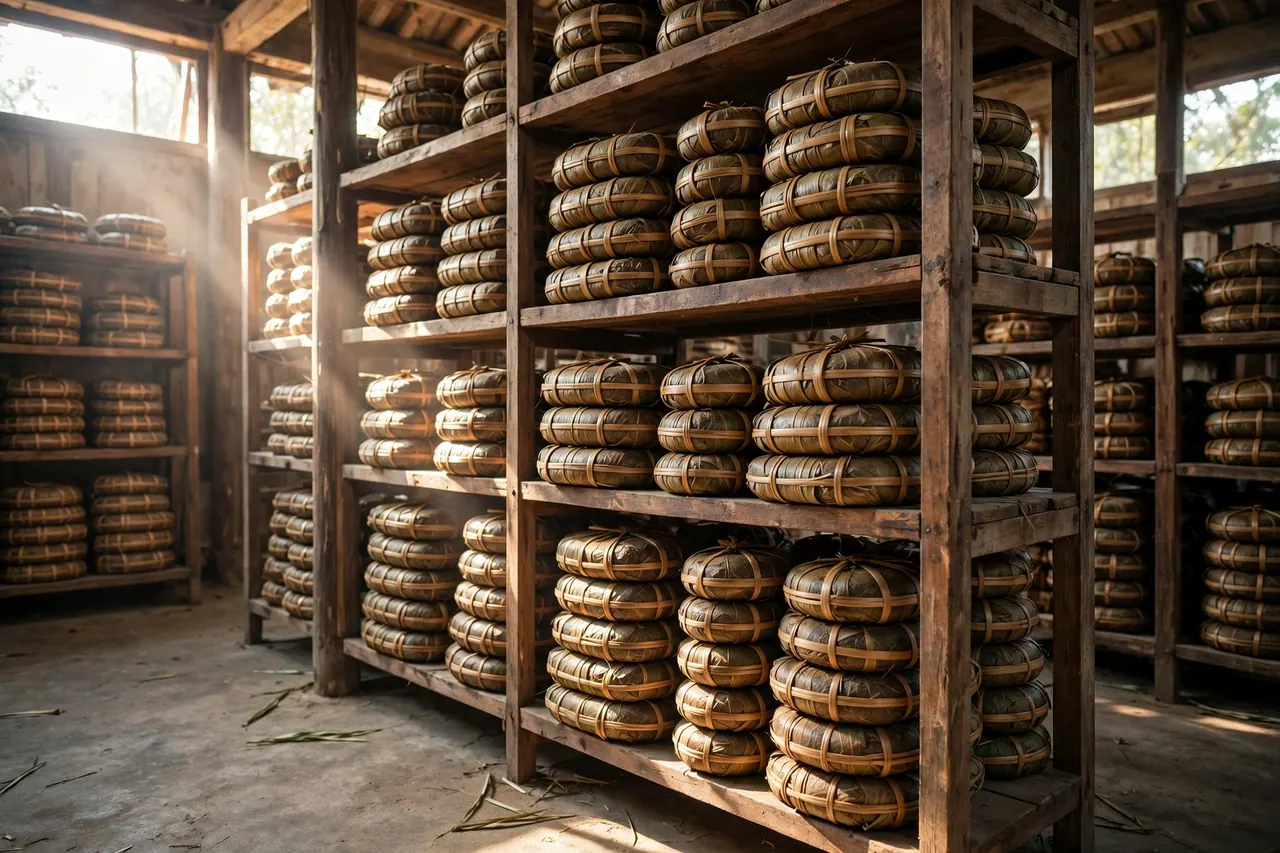
Two cakes from the same batch can taste like different teas ten years later. The difference is usually not the leaf — it is the warehouse. If you buy pu-erh to keep, these three words are worth understanding: dry storage, wet storage, and warehouse tea.
Storage is slow transformation. After pressing, a cake keeps changing: oxygen and a modest amount of moisture let its bitter compounds soften and its aroma deepen. Heat and humidity speed that change up; cool, dry air slows it down. Everything below follows from that one fact.
Dry storage means a clean, ventilated place with moderate humidity — most homes in most of China, most of the time. Change is slow: a raw cake may need five to ten years to fully mellow. The payoff is cleanliness — the aroma stays clear and layered, and nothing foreign grows on the tea. When sellers praise a "dry-stored" old cake, this patience is what they are praising.
Wet storage pushes the same process fast with high heat and high humidity, traditionally in basements and warehouses in hot, humid cities. A young cake can taste "aged" in two or three years: dark liquor, mellow body. The cost is risk — pushed too far, the tea picks up musty, cellar notes, and genuinely mouldy tea is a health problem, not a flavour. Mild traditional wet storage, done carefully and followed by years of dry resting to clear the warehouse character, produced some famous old teas. Rough, rushed wet storage produced a lot of bad ones.
"Warehouse tea" (rucang) usually refers to tea deliberately put into humid storage to accelerate ageing. It is not automatically bad — but it must be judged in the cup, not by the label. Brew it: a clean, sweet, woody cup is fine; a cup that smells of a damp cellar, tastes sour, or leaves your throat scratchy is not, whatever the story says.
For home storage, the practical takeaway is simple: you cannot easily fake ten years, and you do not need to. Keep cakes dry, clean and away from smells, taste one every year, and let time do the work at its own pace. Slow is not a defect in pu-erh — it is the method.
Teas worth a look
$25.15
$26.65