
$25.15
Pile Fermentation: How Ripe Pu-erh Is Actually Made
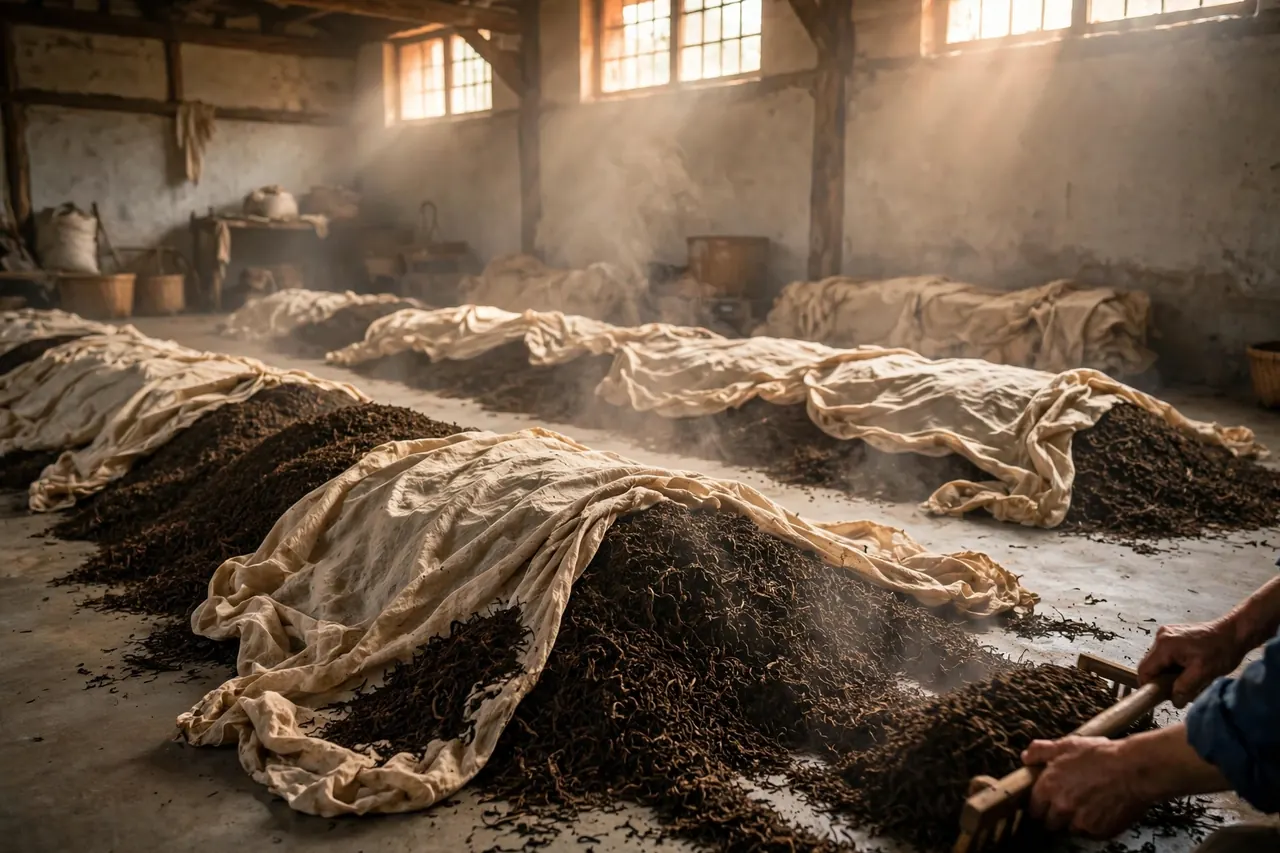
Every ripe pu-erh drinker eventually asks: the leaves are dark, the liquor is red-brown, the taste is mellow — how does it get that way? The answer is one process: pile fermentation, called wodui.
It starts with sun-dried raw material, the same maocha used for raw cakes. The tea is piled on the floor of a fermentation room, sprayed with water, and covered. Inside the pile, naturally present microbes get to work and the temperature climbs — typically somewhere between 40 and 60 degrees Celsius. Workers turn the pile every few days so it ferments evenly and does not burn. The whole process takes roughly 45 to 60 days.
What changes in that time? The sharp, bitter compounds in the fresh leaf break down and transform. The colour deepens to dark brown, the green edge disappears, and the taste turns from brisk and bitter to smooth, sweet and mellow. That is the whole point of the process: raw tea needs years of storage to mellow; pile fermentation gets a young tea to a similar mellow place in about two months. The technique was developed in the 1970s and is what created the ripe category in the first place.
Two things buyers often worry about. First, the smell of a fresh pile — newly fermented tea can carry a "pile taste", a slightly earthy, stuffy note. It is normal, and it fades: decent producers rest the tea before pressing, and a few months of storage cleans it up. If a ripe cake smells sour or musty in a sharp, unpleasant way, that is a different problem — pass on it. Second, cleanliness: fermentation sounds wild, but it is a controlled, managed process in a dedicated room, and the finished tea is sorted and steamed before pressing like any other cake.
So when you drink a ripe cake and taste dates, wood and warm sweetness, you are tasting those two months in the pile. Raw tea mellows with time; ripe tea mellows by craft. Neither is better — they are two roads to the same calm cup.
Teas worth a look
$25.15
$26.65