
$25.15
New Tea or Aged Tea? Choosing the Right Age of Pu-erh
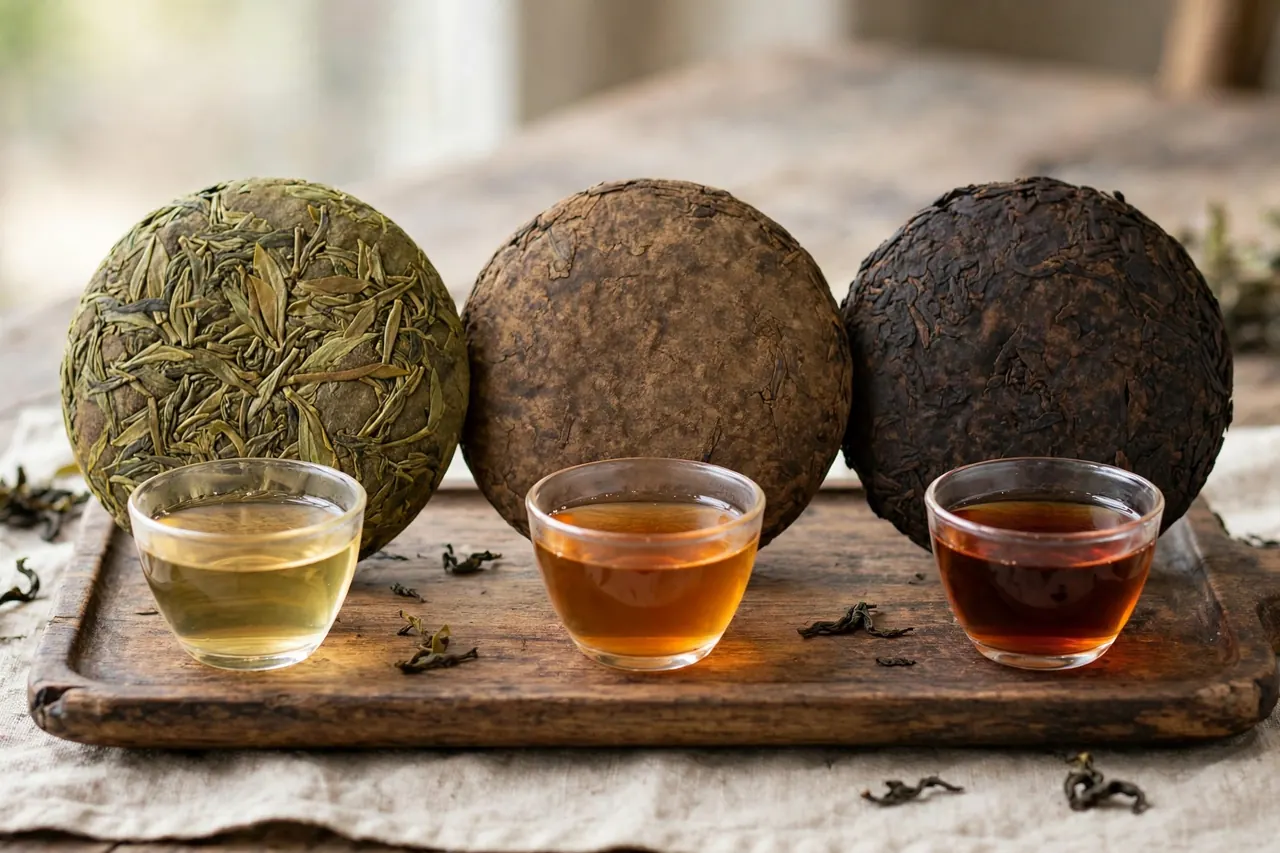
Pu-erh is unusual among teas: the same cake is sold young, middle-aged and old, at very different prices. Buyers ask us which age is "best". There is no best — there is only what you plan to do with it. Here is how the ages actually drink.
Young raw tea (one to three years) is bright and direct: high fragrance, clear sweetness, and a bite of bitterness and astringency that has not yet softened. If you like green tea or fresh oolong energy, you will like young raw pu-erh as it is. It is also the honest way to judge a mountain's character — nothing is hidden yet. Drink it a little cooler and shorter-steeped than you would an old cake, and the bite becomes refreshment.
Middle-aged raw tea (roughly five to ten years, well stored) is where most regular drinkers land. The sharp edges have rounded off, the aroma has moved from floral toward honey and wood, and the liquor feels thicker. This is the age band where a good cake shows both its origin and its storage — and where prices, while higher than new tea, are still mostly paying for tea rather than for legend.
Old tea (fifteen years and up) is mellow above all: deep colour, soft body, flavours of wood, dates and dried herbs. It is also the band where fakes and bad storage concentrate, and where prices detach from the cup. Buy old tea only from sellers you trust, taste before committing to quantity, and be suspicious of any "old" tea that is cheap — genuine age is the one ingredient nobody can discount.
Ripe pu-erh plays by different rules: it is made to drink now. A year or two of resting after pressing clears the pile taste; beyond that it improves gently but does not transform the way raw tea does. There is little reason to pay an age premium for ripe tea.
So: drink young tea for brightness, buy middle-aged for balance, treat old tea as a tasting experience rather than a staple — and if you enjoy the process, buy good young cakes and age them yourself. The cheapest old tea is the one you stored.
Teas worth a look
$25.15
$26.65